
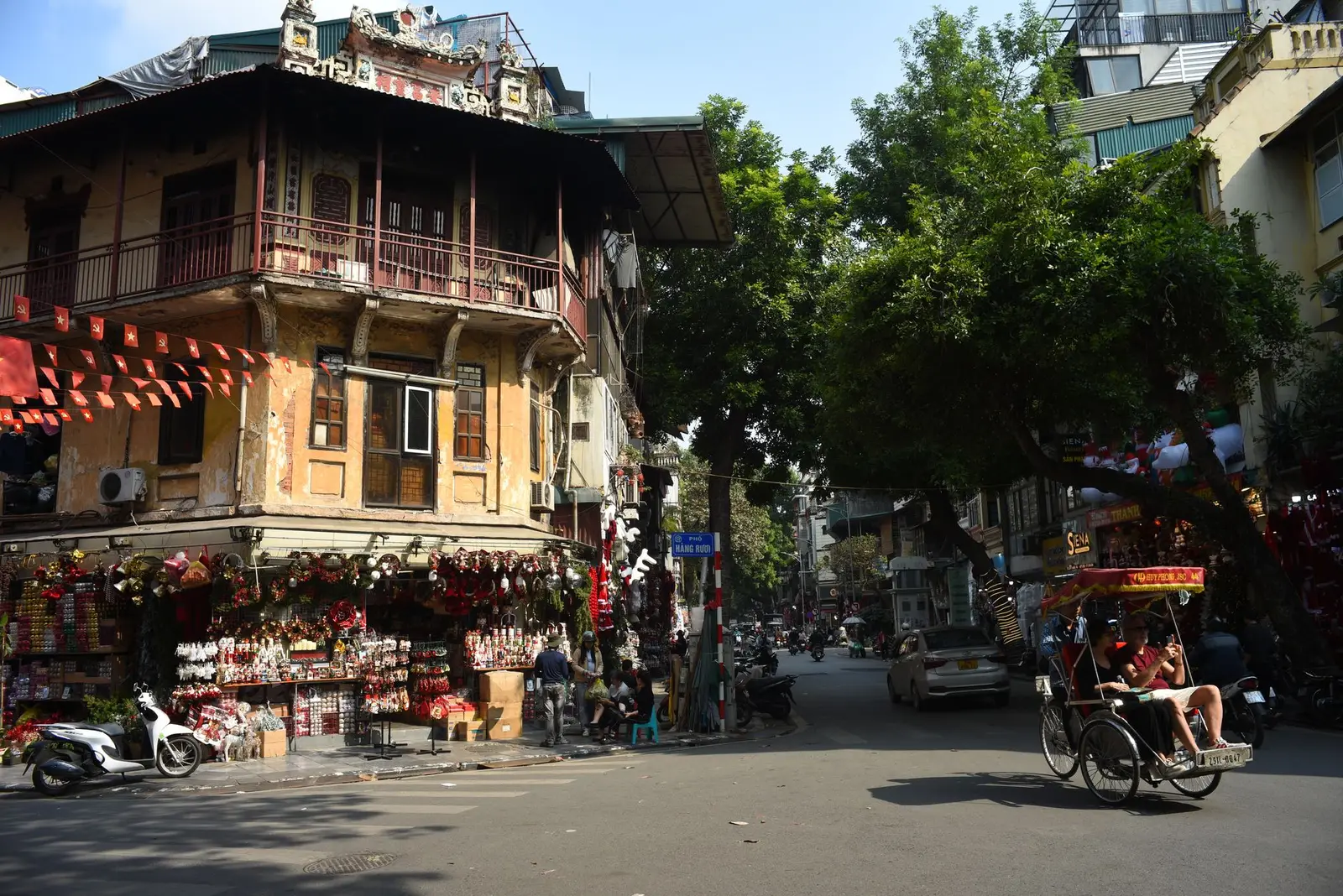
Every Hanoi guide tells you to “explore the Old Quarter.” None of them tell you that you’ll probably get lost within 15 minutes, that half the streets look identical, and that you will definitely be offered a “special price just for you, my friend” at least forty times per day.
The Old Quarter is brilliant. It’s also chaotic, occasionally annoying, and completely overwhelming if you don’t know what you’re walking into. Here’s what I wish someone had told me.
What the Old Quarter Actually Is
The Old Quarter (Pho Co) is a cluster of streets north of Hoan Kiem Lake that’s been a trading district for roughly a thousand years. The original concept: 36 streets, each dedicated to one craft or trade. “Hang” means “merchandise” or “goods.”
- Hang Gai: silk and fabric
- Hang Bac: silver
- Hang Thiec: tin
- Hang Dao: dyed goods
- Hang Ma: paper and decorations
These days? Hang Gai sells tourist souvenirs AND silk. Hang Bac has jewelry shops AND bars. The specialization is mostly historical now, but you’ll still find echoes of the original trades if you look.
The whole area is roughly 1 square kilometer. Everything is walkable. The streets are narrow, packed with motorbikes, and almost always interesting.
The Gate You Can Still Walk Through
My grandfather grew up in these alleys, and he used to say Hanoi originally had five gates into the walled city, the Cua O. Four of them are just names on traffic circles now. Only one still stands: O Quan Chuong, on Hang Chieu Street at the northeastern edge of the Old Quarter.
It’s easy to miss if you’re not looking for it, a stone gateway with a small shrine on top, traffic flowing around it like it’s just another intersection. My grandfather used to stand there and tell me, “this gate is older than your country, con.” It was built in 1749. Worth the five-minute detour if you’re already up near Dong Xuan Market, if only to put your hand on something that’s genuinely older than most countries on earth.
What “Hang” Actually Means, and Why It Matters
Every alley in the Old Quarter had a name, and every name had a trade attached to it. That wasn’t branding. It was a real, functioning economy that ran for a thousand years before anyone called it a tourist district. Hang Bac had silversmiths before Europe had banks. Knowing that changes how you walk these streets, even the ones that now just sell phone cases and knockoff sunglasses.
Best Streets for Specific Things
For food:
- Hang Buom: Snacks, dried goods, and some seriously good Che (sweet dessert soup)
- Ly Quoc Su: Pho street. Multiple solid options within a 100-meter stretch
- Ta Hien: Beer street at night, decent Banh My carts during the day
- Luong Ngoc Quyen: Late night food after the beer street crowd thins out
For shopping:
- Hang Gai: Silk, tailoring, lacquerware (touristy but some genuine quality)
- Hang Dao: Clothing, mostly fast fashion
- Hang Bac: Silver jewelry, some legit artisan shops mixed with tourist junk
- Dong Xuan Market: The big indoor market. Wholesale energy. Good for souvenirs if you bargain hard
For coffee and atmosphere:
- Nha Tho (Cathedral area): Upscale cafes, boutique vibes
- Hang Hanh: Small alley cafes, quieter
- Ta Hien / Luong Ngoc Quyen intersection: Bia hoi corner, full chaos mode after dark
For bars and nightlife:
- Ta Hien: The obvious one. Cheap beer, loud, touristy, fun on a Friday
- Hang Buom: Clubs and late-night spots
- Around Hoan Kiem: Rooftop bars with lake views. Higher prices, better vibes
When to Go
Morning (6-9am): The best time. Markets are active, Pho spots are steaming, the streets haven’t gotten insane yet. This is the Old Quarter at its most authentic: locals shopping, vendors setting up, motorbikes delivering goods.
Midday (11am-2pm): Hot. Quiet. Many small shops close for lunch. Good time to hide in a cafe.
Late afternoon (4-6pm): The second wind. Streets fill up again. Golden hour light makes everything look incredible. Best time for walking around and photography.
Night (7pm onwards): Peak chaos. The weekend night market (Friday-Sunday) shuts down Hang Dao and surrounding streets to traffic. Street food stalls appear. It’s crowded, loud, and genuinely exciting.
Scams to Watch For
Look, Hanoi is a safe city. But the Old Quarter has its hustles. Here’s what to watch:
The shoe shine ambush: A guy “accidentally” gets polish on your shoe, then insists on cleaning it, then charges you 500,000 VND. Just keep walking. Say no firmly.
The “where are you from?” opener: Someone strikes up friendly conversation, walks with you for five minutes, then steers you into their cousin’s shop / restaurant / tour office. Not dangerous, just annoying.
Dong Xuan Market pricing: First price quoted to tourists is usually 3-5x the real price. Counter with 30-40% of their asking price and work from there. If they look offended, they’re negotiating. If they actually say no, come up slightly.
Cyclo rides without agreeing on price first: Always agree on the price AND the route before getting on. “Around the lake” means different things to different cyclo drivers.
My Favorite Corners
The alley behind Hang Be Market: tiny Bun Rieu spot with four tables. No sign.
The rooftop of any cafe on Ma May: you can see the whole quarter’s roofline. Every balcony has a different story.
The intersection of Hang Bac and Hang Ngang at 6am, this is where you feel the thousand-year-old trading energy before the tourist wave hits. It’s close to where my grandfather used to sit with his tra da every morning, watching the tai chi groups move in slow motion while the street woke up around him.
And honestly? Any random alley (“ngo”) you wander into. The Old Quarter’s best stuff doesn’t have a street address. It has a plastic stool and a woman who’s been cooking the same dish for 30 years.
Give the Old Quarter at least two full days, still true in 2026 despite how much busier it’s gotten. One for the main streets. One for getting properly, beautifully lost. more here
FAQ
How many days do I need for the Old Quarter?
At least two. One day to see the main streets and markets, one to get lost in the alleys, which is where the best food and atmosphere actually is.
Is the Old Quarter safe at night?
Yes, it’s busy and well-lit, especially around Ta Hien. Normal city precautions apply: watch your bag in crowds, agree on prices before you order or ride.
What are the 36 streets of the Old Quarter actually named after?
Historically, each street sold one trade or good, like Hang Bac (silver) or Hang Gai (silk). Most streets now sell a mix of everything, but the names stuck.
© 2026 ilovehanoi.com. All rights reserved. Original research by Leo Tran. First published on ilovehanoi.com. Unauthorized reproduction prohibited.